
Written by Kananiokekai Guerrero
Two storms. Three weeks.
On August 21, Hurricane Lala hit Hawaiʻi Island's reefs. Before divers could finish counting the broken coral, a second storm was on the way.
Hurricane Lowell peaked as a Category 5 with 160 mph winds. It never made landfall, but it still caused destruction. Over Labor Day weekend, its swell reached up to 30 feet on Kauaʻi and 20 feet on Oʻahu.
The waves were strong enough to wash live coral onto Hawaiʻi’s beaches.
Here's what a storm like Lowell does to a reef, what Hawaiʻi is doing about it, and how you can help.
The storm
Lowell formed as a tropical storm on August 27, about 1,530 miles east-southeast of Hawaiʻi. It hit Category 5 twice, on September 2 and September 5. It's the first Pacific hurricane to do that since Loke in 2006.
Peak impacts on the islands came September 6th to the 8th.
Kauaʻi took the worst of it. Port Allen Small-Boat Harbor lost piers and vessels. Oceanfront homes in Poʻipū were torn open by intense storm surge. All state parks closed.
Oʻahu saw surf push sand and water across Farrington Highway in Waiʻanae, Nānākuli, and Mākaha.
Maui had high water over Honoapiʻilani Highway at Olowalu and three vessels aground or capsized near Mākena and Lahaina.
Then came the rain. The state issued Brown Water Advisories for Kauaʻi, Oʻahu, and parts of Maui. That brown water matters for reefs too.
What we witnessed
It is difficult to put into words what we witnessed beneath the surface.
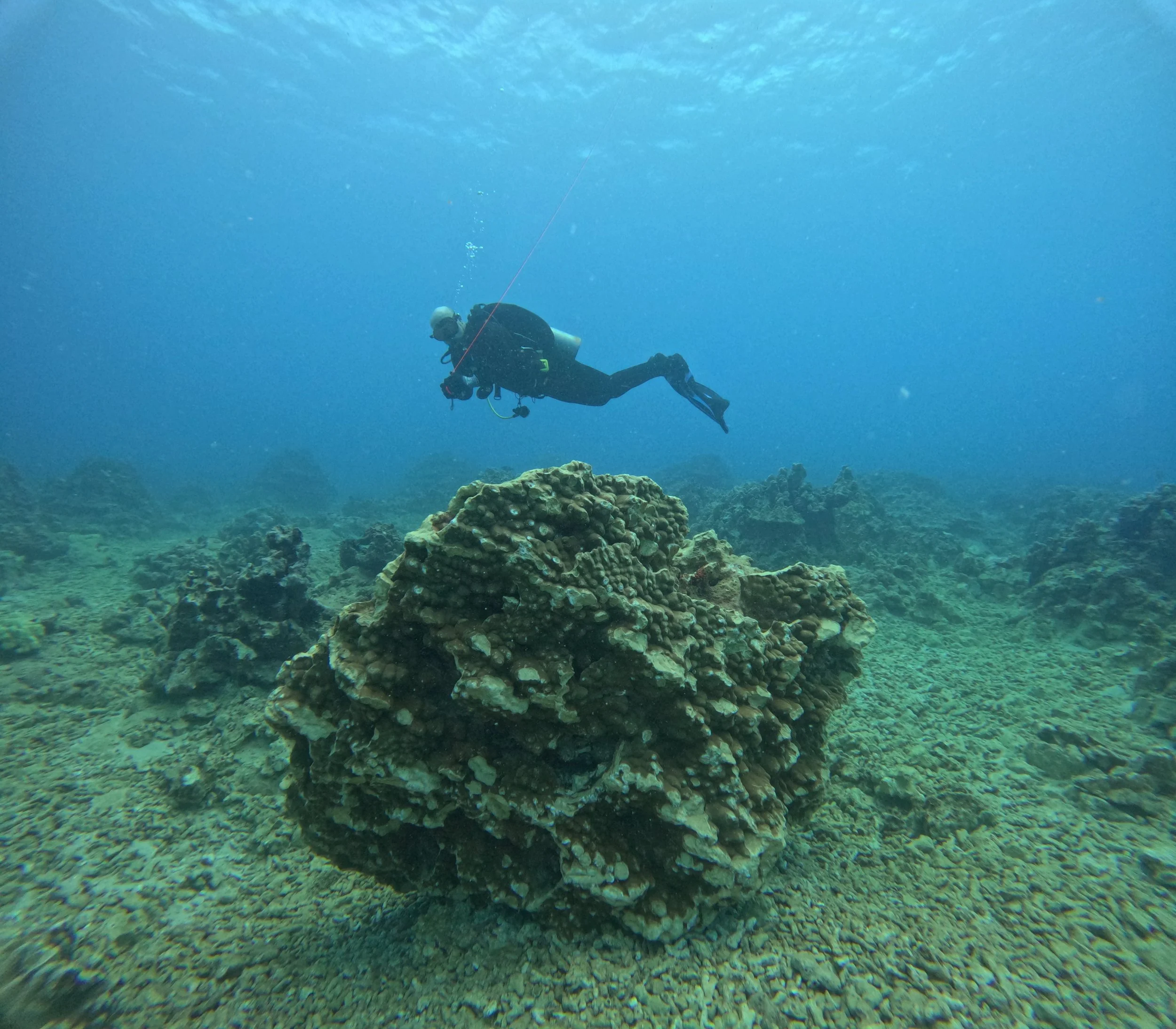
In the wake of Hurricane Lowell, our team surveyed reefs along the Waiʻanae Coast at Hāniʻo, Nānākuli, Pōkaʻi Bay, Mākaha, and Mākua. We found broken colonies. We found massive mounding corals, centuries old, overturned by the force of the waves.
What took generations to grow was changed overnight.
This is the story of what happened to these reefs, why they matter, and where we go from here.
Storms have always shaped our reefs
This kind of disturbance is part of the ocean's natural cycle. Large storms can even cool the water and clear away algae, easing bleaching stress. Knowing that does not make the damage any easier to see.
A reef takes a hurricane in layers:
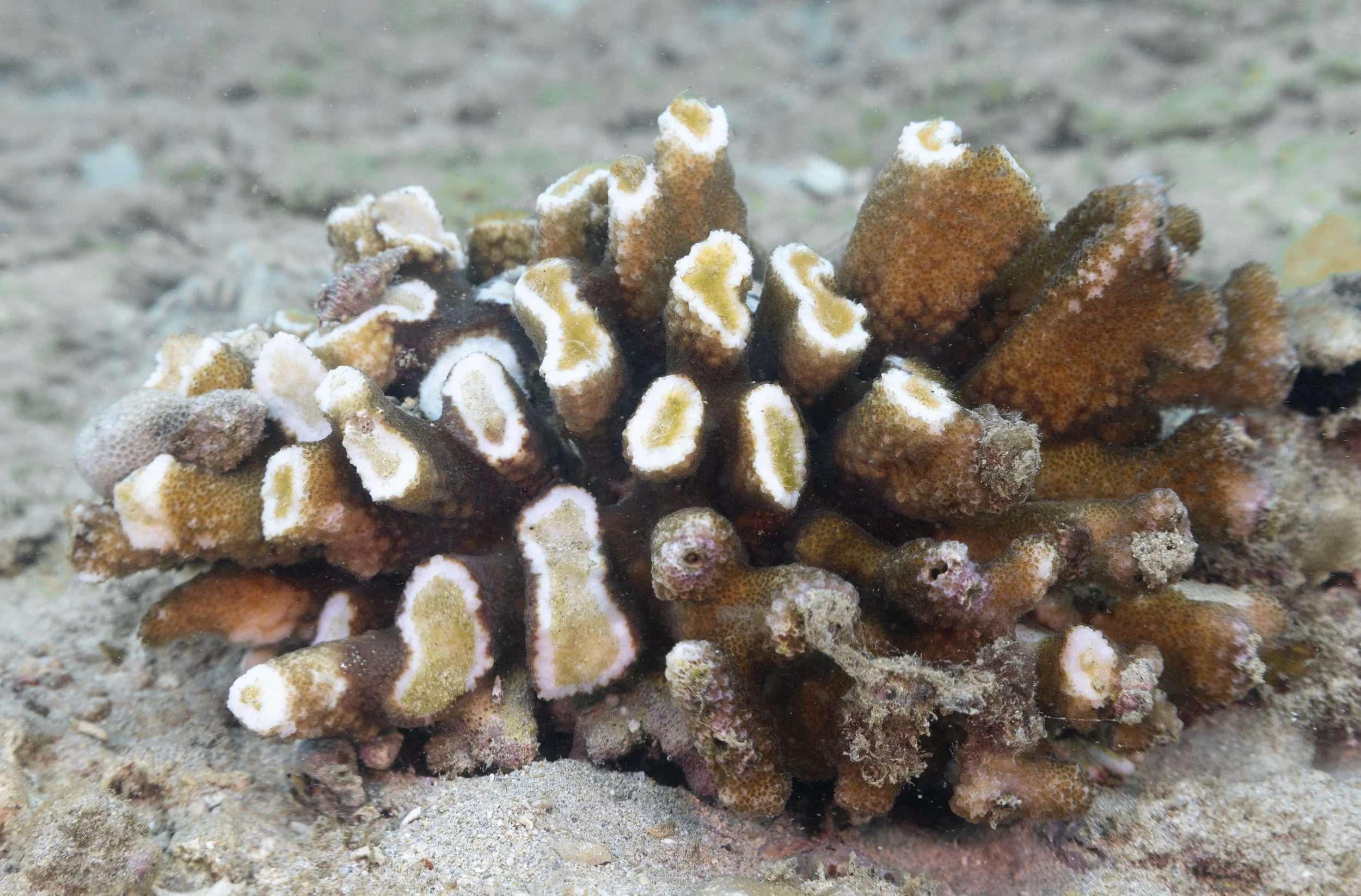
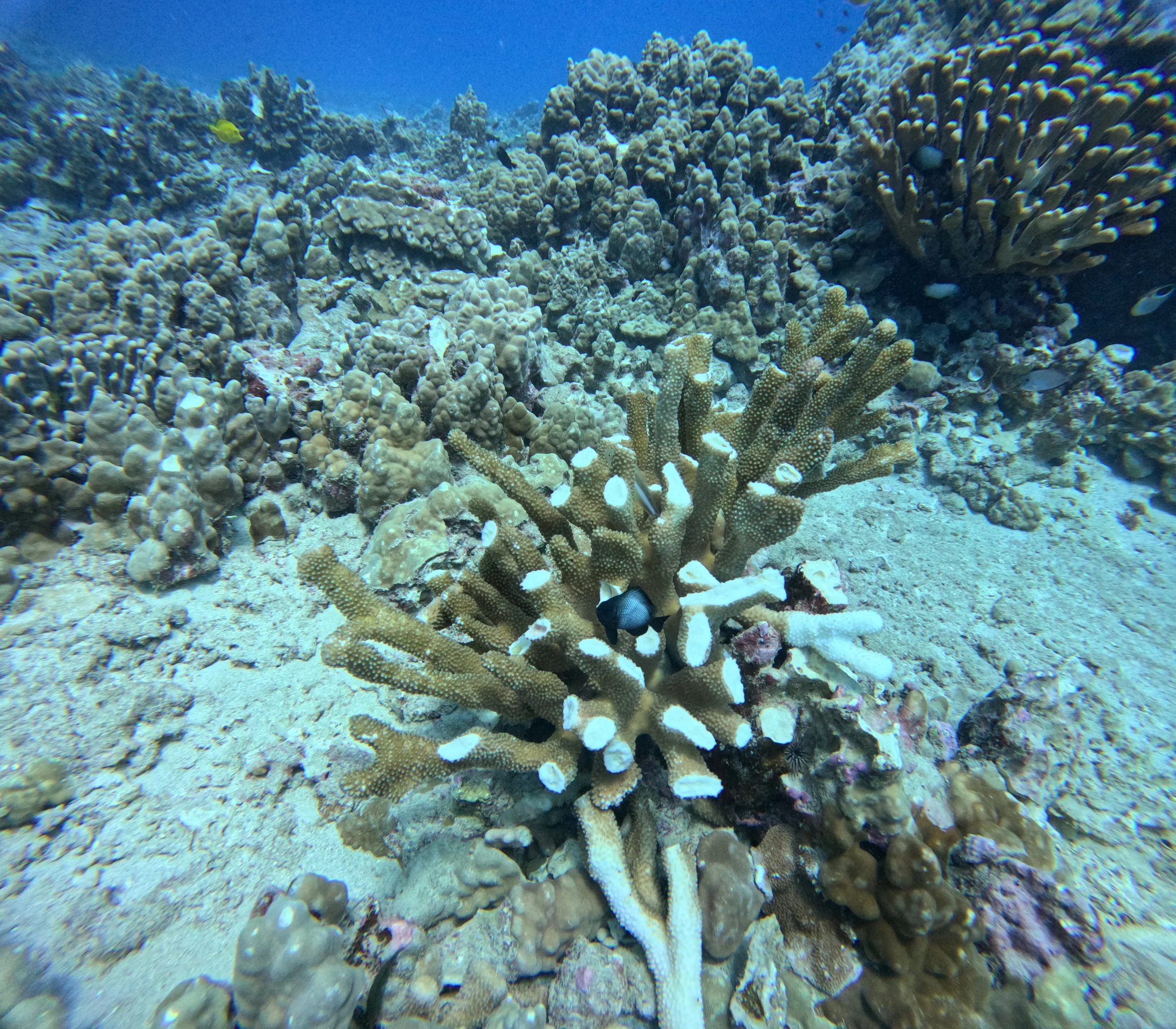
Waves break coral. Branching corals like cauliflower coral and finger coral (Porites compressa) snap first. Mounding corals like lobe coral (Porites lobata) usually hold. When waves are strong enough to overturn them, as we saw on the Waiʻanae Coast, that tells you the force involved.
Broken coral strikes the reef again. Loose fragments tumble in the surge and damage what is still standing.
Colonies flip. Overturned corals land in rubble piles, living tissue pressed against sand and rock.
Runoff follows. Rain carries sediment and freshwater onto the reef, smothering corals and lowering salinity.
Algae moves in. Rubble and bare rock give algae room to settle, which can slow coral recovery.
Scientists expect warming to make tropical storms more intense on average. Stronger storms closer together leave reefs less time to recover in between.
A reef with an insurance policy
Yes, Hawaiʻi's reefs are insured. Since 2022, The Nature Conservancy has held a parametric insurance policy on Hawaiʻi's reefs. It was the first nature insurance policy in the U.S.
Parametric means no lengthy claims process. If a storm's winds hit 50 knots (57 mph) near covered reefs, the policy pays out. Fast money, while broken coral is still alive.
Hurricane Lala brought a payout of $200,000, with Hawaiʻi island reefs being the hardest hit.
Lowell brought $300,000, with Kauaʻi, Niʻihau and parts of ʻOahu impacted the greatest.
That's $500,000 in three weeks. The policy is funded by the Howden Foundation and TNC's Climate Solutions Fund. The money goes to the Hawaiʻi Emergency Reef Restoration (HERR) Network for damage assessment, coral rescue, and reattachment.
Time, care, and a clear understanding
Recovery begins with kilo, observation. It is a practice Hawaiians have relied on for centuries: watch closely, and let what you see guide what you do. Our survey dives are a form of that practice. Before we can restore a reef, we have to understand what has been lost.
That understanding has to come fast. Broken corals can survive for a while, but not forever. "Most of the corals get overturned into a pile of rubble and they won't make it unless we intervene within about four to eight weeks," says Julia Rose, Coral Restoration Program Manager for The Nature Conservancy.
Help is moving quickly. Hawaiʻi's reefs are covered by a first-of-its-kind insurance policy held by The Nature Conservancy. Lowell's winds triggered a $300,000 payout, on top of $200,000 after Lala. The funds support the Hawaiʻi Emergency Reef Restoration (HERR) Network, a statewide group of agencies, scientists, nonprofits, and community organizations working to assess damage and reattach coral.
Hānau ka ʻuku koʻakoʻa
Born is the coral polyp.
The Kumulipo, the Hawaiian creation chant, begins life in the deep sea. The first living creature it names is the coral polyp. From that birth comes an unbroken genealogy that reaches through the creatures of the reef, onto land, and finally to people.
In this telling, coral is not just habitat. It is our oldest relative.
That is why these reefs carry deep cultural meaning. They protect our shorelines. They are home to the fish that feed our families. And they connect us to the very beginning of our moʻokūʻauhau, our genealogy.
When a centuries-old coral is overturned, we are not only counting damage. We are caring for kūpuna.
Our kuleana
Our initial assessment is complete, but our commitment is not. Even in the face of this damage, we have hope in the resilience of our reefs and in the community that continues to stand behind them.
Kuleana is responsibility, and it is shared. Here is how you can stand with these reefs:
Report what you see. Broken or overturned coral, debris on the reef. Send photos to Eyes of the Reef.
Leave coral where it lies. Reattachment takes trained hands. In Hawaiʻi, it is illegal to take, break, or damage stony coral.
Join the work. Volunteer and donate. Learn more at kuleanacoral.org.
Mahalo to the community partners and funders whose support made this survey work possible.
Now, we begin the restoration process.
