
Reef Roundup: Coral Restoration in Hawaiʻi, Q2 2026
Written by Kananiokekai Guerrero
A VR reef experience at Aloha Tower, a message from a class of third graders, new divers, and thirteen community events.
Coral restoration looks like fieldwork. Outplanting, monitoring, surveying, hauling gear. But a reef does not recover because a handful of people are in the water. It recovers when a whole community decides the reef is theirs to care for.
That is the thread running through our second quarter of 2026. Almost everything below is about people arriving at the reef from a different direction: a visitor putting on a VR headset in downtown Honolulu, a third grader writing a letter, a student earning a first scuba certification, a family at a community workday.
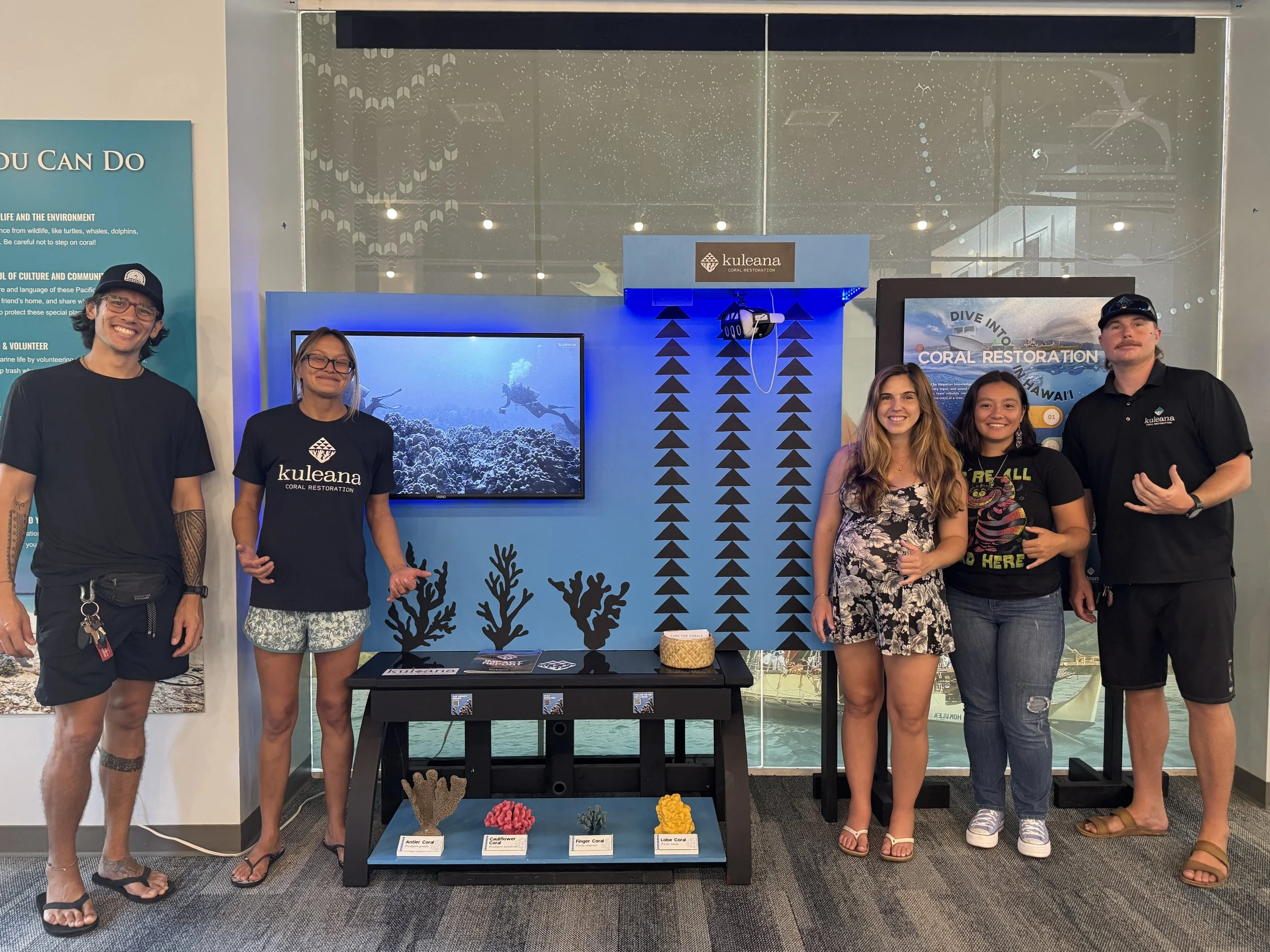
Our coral restoration exhibit is now open at Aloha Tower
Our hands-on coral restoration exhibit has been installed at the Pacific Islands Ocean Exploration Center at Aloha Tower.
The centerpiece is Whispers of the Reef, an immersive VR experience built around real animal sounds recorded at our restoration sites, paired with 3D animations created by Marine Labs VR. A healthy reef is loud. Snapping shrimp, grunting fish, the constant clicking and scraping of a system at work. Hearing it is a different kind of understanding than seeing it.
The exhibit also includes:
3D models of the coral species we most commonly use in restoration
A slideshow of our work and restoration methods
An informational display on the state of coral restoration in Hawaiʻi
If you are downtown, come through and experience it for yourself.
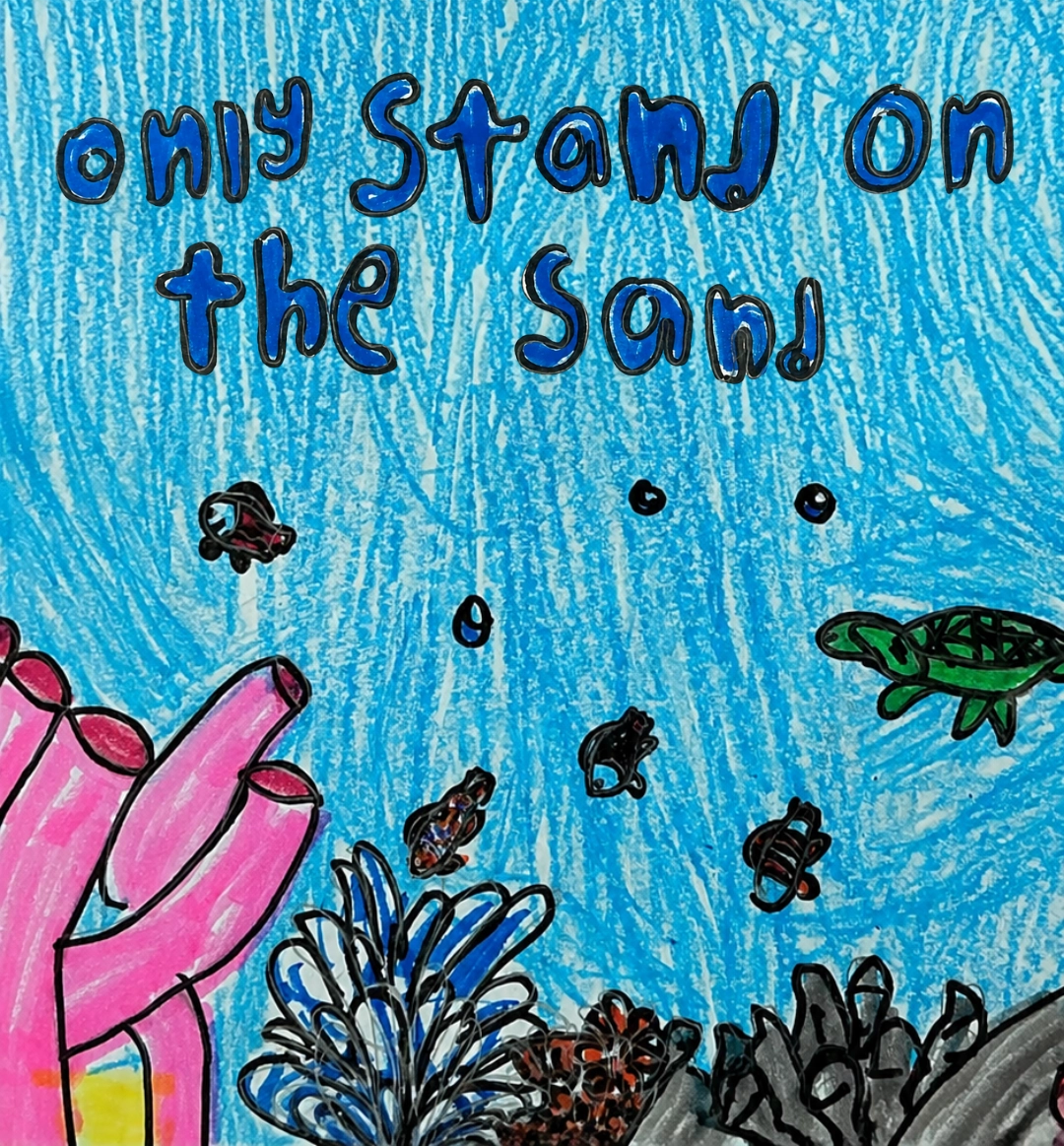
Community highlight: "Only Stand on the Sand"
Earlier this year, the third grade students at Waialua Elementary School sent us handwritten letters. They wrote about loving Hawaiʻi's reefs, about the threats those reefs face, and about wanting to do something. Then they asked us to help them spread the word.
So they made a video. "Only Stand on the Sand" is their reminder, in their own words, that coral is not a rock. It is a living animal, and it does not survive being stepped on.
It is a simple message, and it is exactly right. Mahalo to these students and their teachers for the reminder that protecting our reefs starts with awareness, and that every voice, no matter how young, carries.
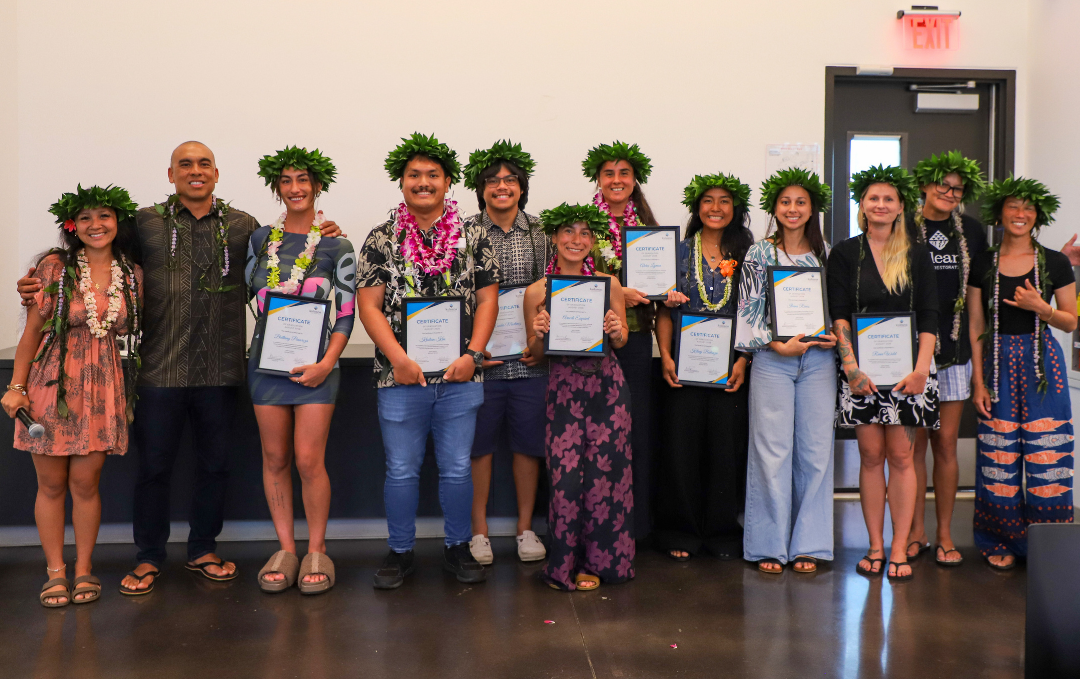
Congratulations to the 2026 COAST graduates
On July 30 we celebrated the completion of our fourth COAST cohort at the Kalanihoʻokahā Community Learning Center in Nānākuli.
Over the course of the program, students earned multiple scuba certifications, gained hands-on restoration experience, connected with working conservation professionals, and explored career pathways in ocean conservation. That last piece matters more than it might sound. Hawaiʻi's reefs need a workforce that comes from Hawaiʻi's communities, and COAST exists to make that pathway visible and reachable for students who might otherwise never see it.
We are incredibly proud of what this cohort accomplished, and we cannot wait to see where their journeys take them.
The COAST program is funded by the NOAA Fisheries Restoration Center.
Out in the community
Quarter 2 was full of chances to talk story with community members, students, and lawmakers about what reef restoration actually involves. We met so many of you across these events:
Hana Pūkoʻa Maunalua Bay
Laulima Workday with Mālama Learning Center
Nā Kama Kai Ocean Clinic
Mālama Workdays with Hoʻōla Hāniʻo
Hoʻākea Mauka to Makai
Hawaiʻi Nature Center Summer Program
Kōkua Hawaiʻi Foundation Plastic Free July
Mauli Ola World Ocean Day Celebration
Outrigger Zone Day at Waikīkī Aquarium
Manini and Me Holoholo Festival
Prince Lot Hula Festival
Clever Keiki Workshops
PULS Outreach
Mahalo to every organization that invited us in and to everyone who stopped by a table, asked a question, or picked up a tool.
Kōkua the work
Every outplanted coral, every certified student diver, and every keiki who learns to step around a reef instead of on it is part of the same effort. If you would like to support the restoration of Hawaiʻi's degraded reefs, you can donate here.
Mahalo for reading, and for standing with us as we work to restore Hawaiʻi's reefs.
